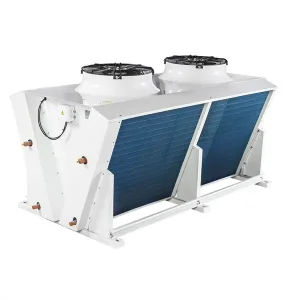
Explore our foundational thermodynamic and insulation solutions, engineered for maximum energy conservation and longevity in industrial applications.
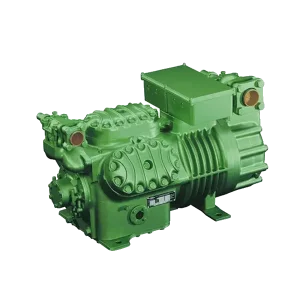
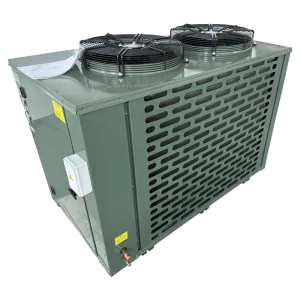
An in-depth analysis of high-density polyisocyanurate and polyurethane composite materials for containment structure engineering.
Modern architectural layouts and high-performance commercial cold chain facilities rely deeply on advanced materials to achieve low energy signatures. Central to this efficiency is the polyurethane (PU) and polyisocyanurate (PIR) foam sandwich panel. Unlike conventional modular panels, industrial-grade PU foam sandwich panels exhibit a closed-cell content exceeding 95%, providing optimal thermal resistance. At a molecular level, the primary difference between polyurethane (PUR) and polyisocyanurate (PIR) cores lies in the chemical ratios and the subsequent ring structures formed. PIR features an increased concentration of Isocyanurate rings, which demand significantly higher temperatures to degrade, yielding superior fire performance profiles (specifically achieving B1 or B2 classifications under GB8624 and matching international standards like FM 4880).
Achieving standard thermal conductivity (Lambda, λ) values as low as 0.018 - 0.022 W/m·K. This low value ensures maximum thermal containment with minimal panel thickness, freeing up storage volume.
With an average core density ranging between 40 to 42 kg/m³, these panels offer tensile strengths exceeding 120 kPa, capable of supporting heavy structural loads over long spans.
PIR core panels exhibit auto-extinguishing properties, leaving a carbonized protective crust when exposed to flame, mitigating fire propagation risks in logistics hubs.
The integration of these properties makes China PU foam sandwich panels manufacturers critical partners for worldwide construction. When choosing a panel configuration, structural engineers must weigh core characteristics, skin thickness (typically 0.4mm to 0.8mm), and joinery tolerances. Precision engineering at the plant stage prevents thermal bridging, ensuring cold rooms operate without localized condensation anomalies.
A criteria checklist for supply chain executives evaluating Chinese factories and technical certifications.
Sourcing commercial wall insulation systems from Chinese manufacturers requires evaluating parameters beyond unit price. Authoritative procurement decisions rely on comprehensive technical evaluations, starting with steel sheet specifications. Optimal configurations utilize Pre-painted Galvanized Iron (PPGI) or Pre-painted Galvalume (PPGL) steel with a zinc coating weight of no less than Z275 (275 g/m²), or AZ150 for coastal facilities to deter chloride corrosion. For food-processing environments and ultra-clean pharmaceutical labs, stainless steel AISI 304 skins are preferred due to their high chemical resistance during sanitization washes.
Equally critical is the tongue-and-groove joint profile, which should incorporate rubber gasket channels to create a continuous vapor-tight barrier. When panels are installed under tensile stress from wind loads, the mechanical integrity of the core-to-steel adhesion is tested. Hence, verifying that a manufacturer utilizes a continuous double-belt lamination process with a pressure curing stage is vital. Non-continuous (injection-molded) panels can suffer from uneven density distribution, leading to localized core shrinkage and subsequent surface delamination over time.
How automation and advanced logistics safeguard global delivery schedules against material volatility.
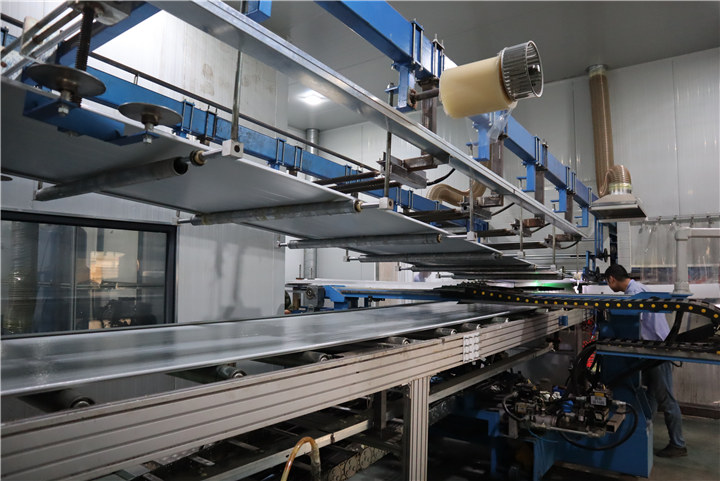
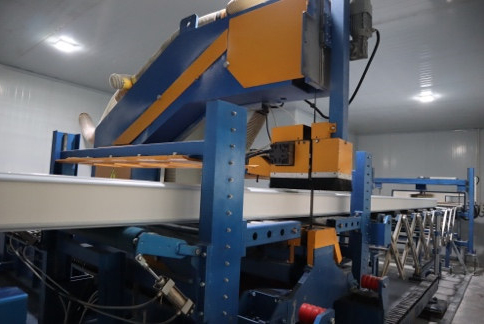
The transition of China's heavy industrial manufacturing from manual assemblies to Factory 4.0 automation is exemplified by Shaanxi YuanShengHeTong Refrigeration Equipment Co., Ltd.'s facilities. The introduction of the first automatic split-joint production line in 2018, followed by a second continuous line in 2020, marked a transition toward high reproducibility and minimal waste. In these modern environments, raw materials like methylene diphenyl diisocyanate (MDI) and polyol blends are continuously metered and mixed through computer-controlled high-pressure foaming machines. The mixture is dispersed onto moving steel sheets that pass through a long, temperature-regulated double-belt conveyor, ensuring uniform expansion and consistent core thickness.
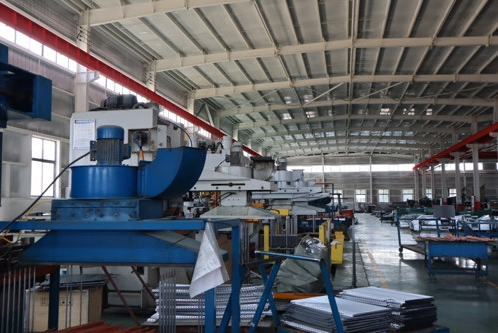
This automated flow guarantees that every batch maintains a target density of 40-42 kg/m³, with deviations limited to under ±2%. Furthermore, the factory's structural capacity (featuring 4 standardized workshops across 60,000 square meters) allows for scale buffer operations, reducing raw material procurement costs and ensuring price stability for end-users, even during periods of global logistics volatility.
Adapting thermal envelope specifications to distinct industrial, commercial, and structural microclimates.
Operating between -40°C and -60°C for deep-freeze storage of high-value seafood and pharmaceutical substances. This application demands thick PIR core profiles (150mm to 200mm) utilizing deep double tongue-and-groove joints to prevent ice bridge formation.
Primarily used in agricultural hubs for long-term apple, pear, and leafy green preservation. These chambers require absolute airtightness, utilizing high-density PUR/PIR panels sealed with specialized elastomeric mastics to maintain precise carbon dioxide and nitrogen levels.
For semiconductor fab lines and biomedical packaging labs. The panels feature flat, anti-static coated steel faces that eliminate dust accumulation points, designed to integrate seamlessly with ceiling HEPA filter grids and wall air return shafts.
Over two decades of engineering development, expanding from regional service provision to international manufacturing.
Founded in 1996, Shaanxi YuanShengHeTong Refrigeration Equipment Co., Ltd. has grown into a structured refrigeration enterprise in Northwest China. The company specializes in manufacturing insulation panels and refrigeration units, alongside offering structural project design, thermal envelope assembly, and after-sales support. By integrating engineering research with production, the organization supplies components to food distribution hubs, pharmaceutical warehouses, and large-scale agricultural storage facilities.
Our founder established the business, initially focusing on refrigeration equipment distribution and regional installation services.
Completed construction of our first manufacturing facility in Shaanxi, successfully producing our first generation of cam-lock sandwich panels.
Expanded operations with a second production facility in Lanzhou, covering the industrial and commercial markets across northwest China.
Relocated the primary Shaanxi plant to a 120-acre modern facility comprising 8 advanced workshops, meeting larger domestic and export demands.
Introduced our first automated split-joint production line, transitioning panel manufacturing toward continuous process flow and curing.
Commissioned a second automated continuous lamination line, increasing throughput and thickness consistency for commercial orders.
Completed the transition to eco-friendly production, incorporating low-GWP blowing agents in response to global environmental regulations.
Verifying performance limits and safety parameters through testing, assessment, and third-party certifications.
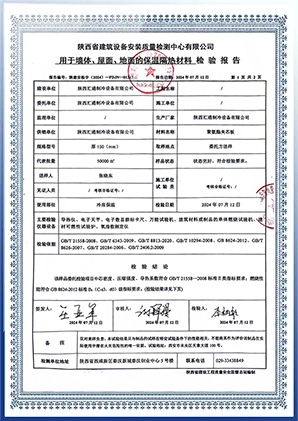
Quality Management Standards
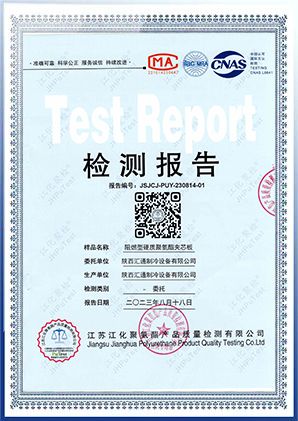
ISO Compliance Verification
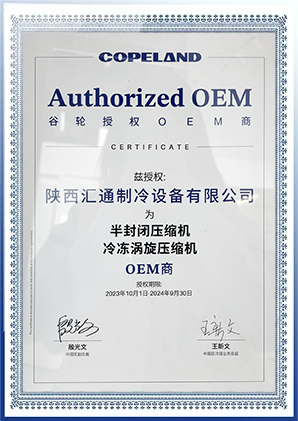
Safety Certification
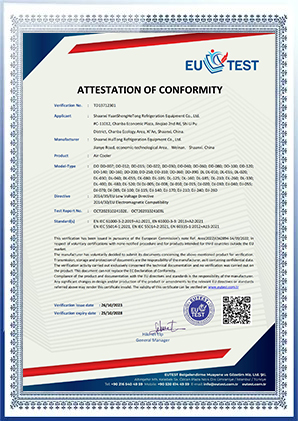
Material Fire Rating
Resolving complex layout questions regarding structural spans, fire safety compliance, and thermal conductivity.
While standard Polyurethane (PUR) core sandwich panels display a thermal conductivity (Lambda, λ) value of approximately 0.022 W/m·K to 0.024 W/m·K, Polyisocyanurate (PIR) panels optimize this metric down to 0.018 W/m·K - 0.020 W/m·K. This improvement is achieved via the integration of highly structured isocyanurate ring molecules, which permit smaller, more stable closed-cell micro-cavities. This helps reduce heat transfer across the panel body and lowers long-term thermal aging rates.
Under the national standard GB8624 (and matching EN 13501 equivalent standards), Class B1 represents flame-retardant materials that undergo minimal combustion and extinguish once the flame source is removed. Class B2 designates normal flammability, where the material resists ignition for a limited period but may support fire propagation if exposed to continuous heat. Class B1 PIR panels are specified for high-occupancy structures, logistics facilities, and large-scale industrial complexes to meet local fire safety regulations.
The density of the foam core (typically targeted at 40 to 42 kg/m³) directly determines the panel's shear strength and compressive resistance. If the density drops below 38 kg/m³, the core cannot sufficiently support the external steel skins under wind or snow loads. This reduction in structural support leads to micro-buckling and eventual structural deflection. Maintaining a high, uniform density is critical for calculating safe free-span distances, particularly in large industrial cold store ceilings.
Pharmaceutical processing environments demand frequent sanitation with aggressive cleaning agents, making standard polyester coatings susceptible to degradation. For these environments, we recommend specifying AISI 304 stainless steel or PVDF (Polyvinylidene Fluoride) coated galvanized steel. PVDF coatings provide chemical resistance against acids, bases, and oxidizing agents, preventing surface degradation and maintaining compliance with hygiene standards.
Our 10-member quality control team uses a multi-stage verification process. Online sensors continuously monitor the raw chemical mass flow, pressure, and curing oven temperatures. Following lamination, we conduct offline laboratory testing on production samples. This testing measures core density profiles, compression strength (aiming for over 120 kPa), shear resistance, and dimensional stability under extreme temperatures, ensuring all delivered panels meet design tolerances.
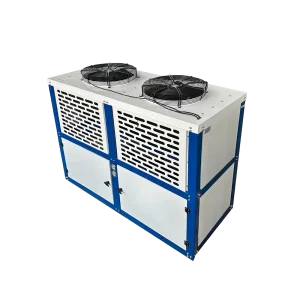
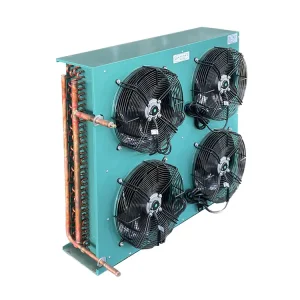
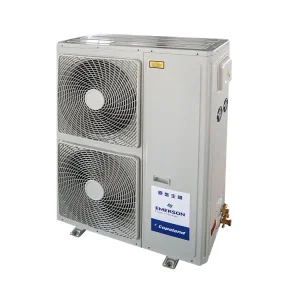
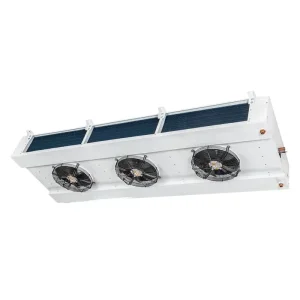
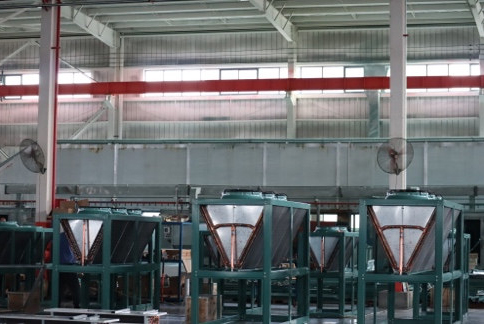
Ancillary components including condensing units, custom evaporators, and secondary insulation panels to complete your thermal envelope.
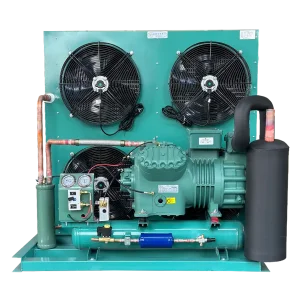
 YuanShengHeTong