Top Refrigeration Condenser Manufacturers for Global Buyers

Time:2026-10-01 Author:Ethan
0%

Choosing among refrigeration equipment suppliers can feel difficult when brochures use similar claims. This guide, Top Refrigeration Condenser Manufacturers for Global Buyers, focuses on evidence rather than polished marketing language.

A reliable Refrigeration Condenser should match the operating environment, refrigerant, cooling load, and maintenance plan. Buyers should examine heat-transfer performance, corrosion resistance, pressure-test records, and production consistency. A condenser installed near a coastal warehouse may need stronger protection than one used in a dry inland facility. Ambient temperature also changes real-world efficiency. Small details matter.

Manufacturer evaluation should include factory experience, engineering capability, quality controls, certifications, and after-sales support. Product documentation should clearly state materials, connection sizes, rated conditions, and allowable operating limits. Delivery capacity matters too. A technically excellent unit is less useful when spare parts arrive late or technical support remains unclear.

No manufacturer is perfect. Published data can also appear stronger than field results. That is why global buyers should compare test conditions carefully and request traceable records. Site references, inspection reports, warranty terms, and installation guidance can reveal practical strengths. Experience often appears in simple details, such as protected packaging, clean brazed joints, and readable nameplates.

This overview does not treat one supplier as suitable for every market. Instead, it presents leading manufacturers through a balanced comparison of technology, reliability, customization, service, and global supply capability. The best choice depends on the application, not reputation alone. Performance matters. Context matters more.
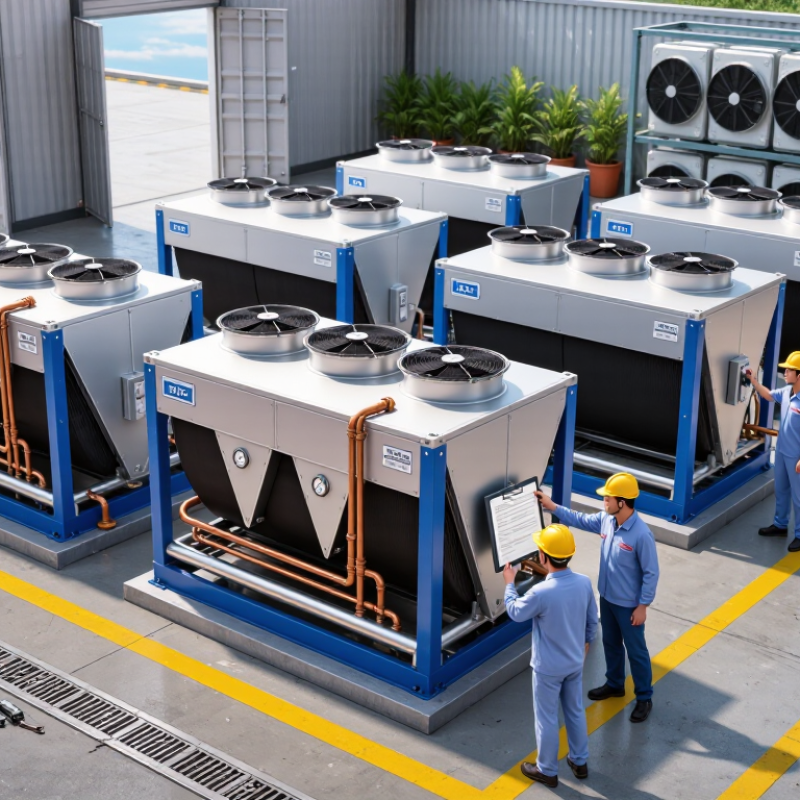
Top Refrigeration Condenser Manufacturers for Global Buyers

What Refrigeration Condensers Are and Why They Matter

A refrigeration condenser removes heat from high-pressure refrigerant vapor. It releases that heat into outdoor air or cooling water. The refrigerant then changes into a liquid. This cycle supports cold storage, supermarkets, food processing, and transport refrigeration. In practical inspections, blocked fins, dirty coils, and poor airflow often reduce performance before compressor failure appears.

Condensers matter because heat rejection controls system efficiency and product safety. The IEA’s The Future of Cooling report found that cooling energy demand could triple by 2050 without stronger efficiency measures. UNEP’s 2023 Global Cooling Watch also projects cooling demand will more than triple by 2050. These figures make condenser design a purchasing decision, not a minor component choice. A larger condenser is not automatically better. Oversizing can increase cost, fan energy, and installation space. That assumption deserves a rethink.

Tips: Check the design ambient temperature, refrigerant compatibility, airflow, corrosion protection, and service access. Ask for verified capacity data under realistic operating conditions. A condenser rated in a laboratory may perform differently beside a dusty loading bay. Review noise levels too. They are often overlooked. Finally, compare seasonal efficiency, not only the lowest purchase price. Some specifications remain unclear, so buyers should request test methods, maintenance intervals, and documented field experience before approval.

How to Evaluate Refrigeration Condenser Manufacturers

Evaluating refrigeration condenser manufacturers requires more than comparing quoted prices. The International Energy Agency’s The Future of Cooling report projects that cooling energy demand could more than triple by 2050 without stronger efficiency measures. This makes verified heat-transfer performance a purchasing priority. Ask for capacity data at your actual condensing temperature, ambient range, refrigerant, and airflow conditions. Ask for proof.

A reliable manufacturer should provide laboratory test records, material specifications, corrosion protection details, and clear operating limits. Check whether testing follows recognized standards, such as AHRI or ISO procedures, where applicable. The UNEP Kigali Amendment assessment links improved refrigerant management with major climate benefits, so confirm refrigerant compatibility and future service availability. A condenser that performs well on paper may struggle beside a dusty loading dock or in coastal humidity.

Review manufacturing experience through traceable project references, inspection procedures, and failure-rate data. Request sample drawings before ordering. Examine tube joints, fin spacing, fan controls, and cleaning access. Lead time matters, but weak documentation can create expensive delays. I would not treat the lowest quotation as the best value; that habit often ignores electricity, maintenance, and downtime. Measure twice. Also question impressive efficiency claims when test conditions are missing. An honest supplier should disclose limitations, not hide them. Reliability is built from evidence, not confident language.

Top Refrigeration Condenser Manufacturers for Global Buyers: How to Evaluate Refrigeration Condenser Manufacturers

Refrigerant compatibility is a practical starting point when evaluating condenser manufacturers. The chart compares commonly used refrigerants by 100-year Global Warming Potential (GWP), helping buyers assess whether a supplier can support lower-impact systems and relevant international requirements.

Data reference: IPCC Fourth Assessment Report, 100-year GWP values. Lower GWP values generally indicate lower direct climate impact when refrigerant leakage occurs. Actual condenser selection should also consider capacity, operating pressure, ambient conditions, corrosion protection, sound level, certification, and service support.

Leading Manufacturer Categories and Regional Strengths

Top Refrigeration Condenser Manufacturers for Global Buyers

Leading Manufacturer Categories and Regional Strengths

Refrigeration condenser suppliers generally fall into four categories: air-cooled, water-cooled, evaporative, and microchannel specialists. Air-cooled models suit supermarkets and remote sites because they need less water. Water-cooled units deliver stable performance in large plants, but require treatment systems and reliable water access. Microchannel designs reduce refrigerant charge and cabinet size. That advantage matters in transport refrigeration and compact cold rooms.

Regional strengths differ. European manufacturers often emphasize low-GWP refrigerants, energy efficiency, and strict documentation. North American producers commonly offer robust industrial systems and extensive service networks. Asian manufacturing centers provide broad capacity, competitive pricing, and increasingly advanced heat-transfer engineering. Middle Eastern suppliers focus on high ambient temperatures, dust protection, and oversized heat-rejection capacity. The International Energy Agency reports that cooling energy demand could more than triple by 2050. This creates pressure for efficient condenser selection, not merely lower purchase prices.

Tips: Ask for certified capacity data at your actual ambient temperature. A condenser rated at 35°C may perform poorly at 45°C. Check coil coatings, fan controls, spare-part lead times, and refrigerant compatibility. Also compare noise and water consumption. Data is not always comparable. Some buyers overlook seasonal efficiency because the nameplate rating looks impressive. That is a costly mistake. Experienced teams should request field references from similar climates and operating loads.

Key Standards, Technologies, and Product Selection Factors

Top Refrigeration Condenser Manufacturers for Global Buyers

Condenser selection now depends on standards, climate data, and verified operating performance. The IEA’s The Future of Cooling report projects global cooling demand could triple by 2050. This pressure makes efficiency more than a purchasing preference. Buyers should check capacity at the actual design temperature, not only at laboratory conditions. Small details matter. Air-cooled units suit water-stressed sites, while evaporative systems can reduce condensing temperatures but require water treatment and maintenance.

Compliance should be documented before price comparisons begin. ASHRAE 15, ISO 5149, and EN 378 address refrigerant safety, pressure protection, machinery rooms, and installation controls. AHRI 460 provides a useful framework for rating forced-circulation air-cooling equipment. Ask manufacturers for certified test conditions, sound data, fan power, pressure-drop figures, and material specifications. A stainless-steel coil may resist coastal corrosion better, but coating quality and tube expansion still need verification.

Refrigerant compatibility deserves careful review as regulations evolve. UNEP’s Kigali Amendment schedules a global phase-down of high-GWP hydrofluorocarbons, increasing interest in lower-impact refrigerants. Natural refrigerants can improve environmental performance, yet they may require different safety systems, controls, and technician training. Field inspections often find fouled fins, blocked airflow, or incorrect fan staging. A cheaper condenser can become expensive quickly. Still, no selection formula is perfect; weather, maintenance skill, and real load patterns can defeat a technically impressive specification.

How Global Buyers Compare Suppliers and Manage Purchasing Risks

Global buyers compare refrigeration condenser manufacturers through measurable performance, not attractive catalogs. I examine heat rejection capacity, refrigerant compatibility, operating temperature, pressure ratings, and corrosion resistance. Test conditions must be clear. Otherwise, two suppliers may report different results using similar figures.

A practical comparison sheet should include tube material, fin spacing, airflow requirements, noise levels, dimensions, and service access. I also request production samples, inspection records, and factory test procedures before approving large orders.

Data matters more. A supplier with a lower unit price may create higher costs through weak packaging, unstable lead times, or difficult replacement parts.

Purchasing risk also includes communication and documentation. Buyers should verify drawings, certificates, warranty terms, payment milestones, and delivery responsibilities in writing. I prefer staged inspections before shipment, especially for custom condenser designs.

A pre-shipment check can reveal blocked passages, incorrect fan rotation, or damaged fins. Small gaps matter.

However, paperwork alone cannot prove manufacturing discipline. A video call may show an organized facility, yet it cannot replace independent inspection. I have seen reliable-looking quotations hide unclear testing assumptions. That mistake deserves reflection.

Suppliers should explain how capacity changes with ambient temperature and refrigerant conditions.

Buyers can then compare like with like and plan spare inventory, maintenance training, and regional support without relying on optimistic promises.

FAQS

What does a refrigeration condenser do?

It removes heat from high-pressure refrigerant vapor. The refrigerant then becomes liquid. This supports cold storage, supermarkets, food processing, and refrigerated transport.

Why is condenser performance important?

Heat rejection affects energy use and product safety. Poor airflow can raise operating costs and temperatures. Small problems matter.

What common issues reduce condenser performance?

Blocked fins, dirty coils, and weak airflow are common problems. Dust near a loading bay can restrict heat transfer. Compressor failure may appear later.

Is a larger condenser always better?

No. Oversizing can increase purchase cost, fan energy, and installation space. That assumption needs checking.

What information should buyers request before purchasing?

Request capacity data for your actual ambient temperature, refrigerant, condensing temperature, and airflow. Ask for test methods and operating limits. Missing conditions weaken comparisons.

How can buyers evaluate a condenser manufacturer?

Review project references, inspection procedures, material details, and failure-rate data. Request sample drawings before ordering. Confidence alone is not evidence.

Which physical details should an inspection cover?

Examine tube joints, fin spacing, fan controls, corrosion protection, and cleaning access. Coastal humidity needs extra attention. Service access saves time.

Should buyers choose the lowest quotation?

Not automatically. Compare seasonal efficiency, maintenance, electricity, lead time, and possible downtime. The cheapest unit may become expensive later.

How should refrigerant compatibility be checked?

Confirm compatibility with the planned refrigerant and future service requirements. Review documented operating limits. Do not rely on vague wording.

What makes a condenser selection reliable?

Use verified performance data, realistic site conditions, clear documentation, and traceable experience. Laboratory results may differ beside dust, heat, or humidity. Recheck the assumptions.

Conclusion

This guide explains what a Refrigeration Condenser is and why it is essential for efficient heat rejection, stable temperature control, and reliable operation in commercial, industrial, and transport cooling systems. It outlines how buyers can evaluate manufacturers by examining engineering capabilities, production quality, customization options, testing procedures, certifications, delivery capacity, technical support, and after-sales service. It also compares broad manufacturer categories and regional strengths without focusing on individual brands.

The article reviews important standards, materials, corrosion protection methods, airflow designs, energy-saving technologies, and product selection factors such as capacity, refrigerant compatibility, operating conditions, noise, footprint, maintenance needs, and total lifecycle cost. For international purchasing, it recommends comparing suppliers through clear technical specifications, sample validation, factory assessments, transparent quotations, contract terms, logistics planning, warranty coverage, and risk-control procedures. This structured approach helps global buyers choose dependable suppliers and reduce performance, compliance, delivery, and long-term operating risks.

Ethan

Ethan

Ethan is a seasoned marketing professional with a deep expertise in our company's innovative product line. With a passion for sharing knowledge and insights, he takes the lead in regularly updating our corporate blog, where he explores industry trends, product features, and effective marketing......