Choosing a Piston Compressor in 2026 is less about chasing the largest horsepower number and more about matching the machine to its real workload. Paul Hanlon, author of the technical reference Compressor Handbook, provides a useful engineering perspective. The following is a paraphrase, not a verbatim quotation: “Select the compressor for the system’s actual duty, not its headline rating.” It is a simple reminder, but a useful one.
Start with the air demand at the point of use. A small workshop running an impact wrench intermittently has different needs from a production line filling a receiver through long shifts. Note the required pressure, flow, duty cycle, and air quality. Then compare those needs with the compressor’s rated delivery, motor power, tank size, and service requirements. Look closely at the data sheet. Discharge pressure can fall under load, and a larger tank cannot fix an undersized pump.
The details matter. Consider noise near occupied work areas, ventilation around the compressor, access for oil changes, and the availability of replacement parts. A belt guard that is awkward to remove may turn routine maintenance into a neglected task. Not glamorous, but important. This guide will explain how to evaluate these factors, compare common piston-compressor designs, and avoid buying capacity you will rarely use. Real operating conditions are sometimes messy; a careful estimate is still better than a confident guess.
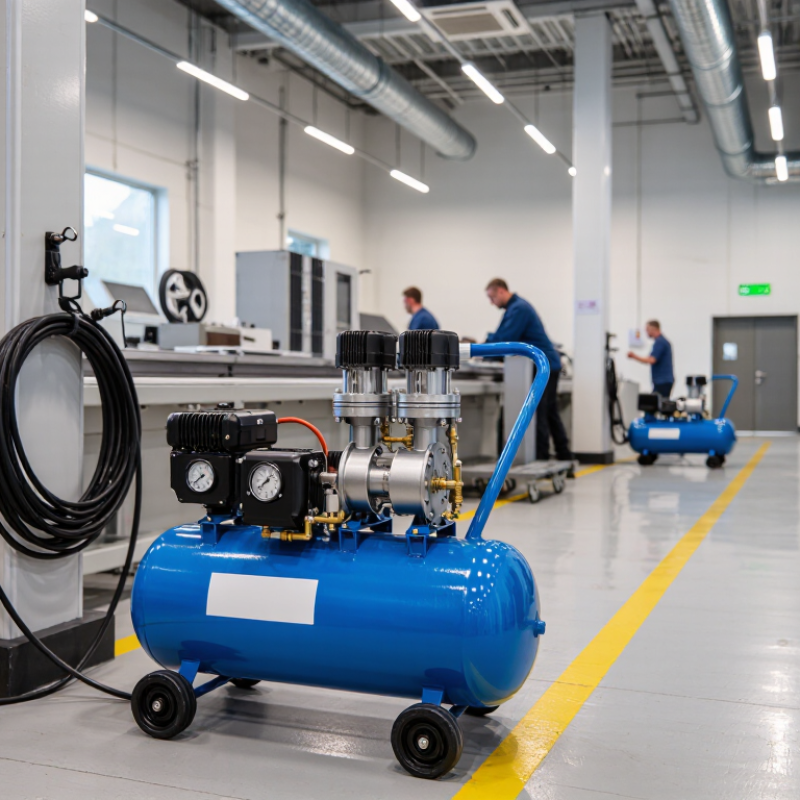
Choosing a piston compressor starts with the actual job. Start with the job, not the catalog. Define the required delivery pressure and flow at the point of use, not just at the compressor outlet. A workshop tool used for short bursts has different needs from a process running for hours. Note peak demand, average demand, and how often pressure drops occur. Small details matter.
Next, describe the gas clearly. Air may contain moisture, oil, or dust; other gases can require different seals and wetted materials. Check composition, inlet pressure, temperature, and required purity. Ask whether the gas changes during operation. A compressor sized for one steady flow can struggle when several users open valves at once. Leave room for real demand, but avoid oversizing without a reason.
Operating conditions shape the choice as much as rated capacity. Record ambient temperature, altitude, ventilation, available power, and expected duty cycle. A hot, dusty room can shorten service intervals, while frequent starts may increase wear. Confirm noise limits and space for maintenance access. In practice, site readings are often less tidy than planning sheets suggest. Recheck assumptions with measured demand, and revise them when field data disagrees.
Define the application, gas requirements, and operating conditions before selecting a piston compressor. The chart shows indicative discharge-pressure ranges commonly encountered in representative applications.
Selection note: Actual requirements depend on gas composition, inlet pressure, temperature, flow rate, compression ratio, discharge temperature, required purity, and the number of compression stages. Always confirm the final specification with a qualified compressor engineer.
How to Choose a Piston Compressor in 2026?
Compare Piston Compressor Designs and Configuration Options
Piston compressors differ in how they build pressure and handle daily demand. A single-stage model suits many intermittent tasks, such as running a small impact wrench in a workshop. Two-stage designs compress air in steps, often making them a better fit for higher pressure or longer operating periods. Check the rated airflow at your required pressure, not just the advertised horsepower. That number matters.
Oil-lubricated compressors can suit demanding, frequent use, but their air lines may need filtration to control oil carryover. Oil-free designs avoid that lubrication in the compression chamber, which can be useful where cleaner air is required. They may still need maintenance, and their service life depends on operating conditions. The “oil-free” label is not a maintenance plan.
Configuration affects the installation as much as the compressor itself. A tank-mounted unit stores air and can reduce frequent starts during short bursts of use. A base-mounted unit may offer flexibility in larger installations, but needs suitable piping and a stable foundation. Compare duty cycle, motor supply, cooling, noise, and available service access. Measure the doorway, too. Buyers sometimes focus on peak pressure and overlook recovery time; a compressor that cannot keep up with the tool may interrupt work. Leave room for that possibility when sizing the system.
| Design or Configuration | Typical Pressure Range | Best Suited For | Duty and Air Demand | Lubrication | Main Advantages | Key Considerations |
|---|---|---|---|---|---|---|
| Single-stage, single-cylinder | Commonly around 6–10 bar (87–145 psi), depending on model | Small workshops, garages, intermittent tool use, and general-purpose tasks | Typically suited to intermittent operation and modest air demand | Oil-lubricated or oil-free, depending on design | Simple design, compact footprint, and comparatively straightforward maintenance | May not meet higher pressure requirements or sustained, high-volume demand; check the rated duty cycle |
| Single-stage, twin-cylinder | Often similar to other single-stage units, commonly up to about 10 bar (145 psi) | Workshops needing more air delivery than a small single-cylinder unit can provide | Suitable for intermittent to moderate demand; actual capacity depends on motor and pump size | Usually oil-lubricated; oil-free versions are also available | Can provide greater displacement than a comparable single-cylinder design | More cylinders do not automatically mean higher pressure; compare delivered air capacity at operating pressure |
| Two-stage, multi-cylinder | Commonly around 10–14 bar (145–203 psi); specialized designs can differ | Applications needing higher pressure, such as certain industrial tools and process equipment | Available for moderate or heavier demand, depending on the compressor’s rated duty and cooling | Commonly oil-lubricated; oil-free models are available for selected applications | Compresses air in stages, with intercooling between stages to improve compression efficiency | Usually larger and more complex than a single-stage unit; verify maximum pressure and required airflow |
| Oil-lubricated piston compressor | Varies by stage count and model; available in both single- and two-stage designs | General workshops, maintenance areas, and applications where trace oil in the air is acceptable | Choose based on the specified duty cycle and required delivered airflow | Oil lubricates moving components; oil level and scheduled oil changes are required | Lubrication helps reduce friction and wear when the compressor is operated as specified | Compressed air may carry oil aerosols; use appropriate filtration where air quality matters |
| Oil-free piston compressor | Varies by model; check the manufacturer’s rated operating pressure | Applications where oil contamination must be minimized, such as some laboratory or clean-air uses | Many models are intended for intermittent or limited-duty operation; confirm the rated duty cycle | No oil is used to lubricate the compression chamber; other components may still require maintenance | Reduces the risk of oil entering the compressed-air stream from the compression chamber | “Oil-free” does not remove moisture or all contaminants; filtration and air treatment may still be needed |
| Portable compressor with receiver tank | Commonly designed for general-purpose pressures; model-specific ratings apply | Mobile repair work, small job sites, tire inflation, and occasional pneumatic-tool use | The receiver stores air for short demand peaks; the pump still needs recovery time | Available in oil-lubricated and oil-free versions | Easy to move and the tank can help supply brief bursts of air | A larger tank does not increase the pump’s sustained airflow; check both delivered airflow and tank capacity |
| Stationary compressor with receiver tank | Selected according to the required tools or process; single- and two-stage options are common | Fixed workshops, maintenance facilities, and installations with predictable air demand | The receiver helps buffer demand fluctuations; size the pump for ongoing consumption | Depends on the selected pump design | Provides a fixed air supply and can reduce frequent starts when correctly sized | Allow for ventilation, condensate drainage, electrical requirements, noise, and safe tank installation |
| Duplex or multiple-compressor arrangement | Set by the individual compressors and system controls | Facilities needing staged capacity, backup capability, or more flexible operation | Units can be sequenced to match changing demand; system design determines available airflow | Depends on the compressors selected | Can provide operational flexibility and allow one unit to remain available when another is serviced | Requires suitable controls, piping, receiver capacity, and coordinated maintenance |
Selection note: Pressure and airflow ranges are indicative, not guarantees. Compare the compressor’s delivered airflow (FAD) at the required working pressure, rated duty cycle, air-quality requirements, power supply, and service needs. Allow a suitable margin for system leaks and pressure losses.
Choose a piston compressor by matching delivered capacity to the tools running at the same time. Add their air demands, then allow for pressure losses and measured leakage. For example, two tools drawing 4 CFM each need at least 8 CFM during simultaneous use. Check the compressor’s delivered CFM at your required pressure, not its displacement figure. A tool requiring 90 psi may need a higher compressor setting to cover losses through hoses, filters, and fittings. That gap matters.
Calculate power from the compressor’s rated motor load and confirm your electrical supply can support startup current. Size the receiver tank for brief demand peaks and acceptable motor cycling; a larger tank cannot make up for inadequate compressor capacity. The U.S. Department of Energy’s Improving Compressed Air System Performance sourcebook reports that compressed air uses about 10% of manufacturing electricity. Efficient sizing is worth checking, though actual savings depend on the system and its use.
Tips: Record each tool’s CFM and pressure, then note which tools overlap during a typical shift. Compare that demand with rated output at pressure. Check the duty-cycle limit and tank guidance in the equipment documentation. A spreadsheet helps, but it can miss a leaking fitting or an unusually busy workday. Recheck your assumptions.
How to Choose a Piston Compressor in 2026?
Start with the air your tools actually need: pressure, flow, and daily duty cycle. A workshop running nailers intermittently has different demands from one powering a blast cabinet for hours. Match the compressor’s delivered airflow at working pressure, not just its motor horsepower. The U.S. Department of Energy’s Improving Compressed Air System Performance sourcebook notes that compressed air can account for about 10% of electricity used in U.S. manufacturing, and more in some facilities. Waste gets expensive.
Check materials where heat, moisture, and wear meet. A sturdy cylinder and effective cooling matter during repeated starts; accessible filters and drain points make routine service less awkward. Ask for operating-temperature limits and maintenance intervals, not vague claims of “heavy duty.” Then compare specific power and airflow using standardized performance data. CAGI’s compressor data sheets provide a useful way to compare package performance under stated conditions. Conditions matter.
Controls should protect the motor from excessive starts and help maintain stable pressure without needless unloading. Look for pressure relief protection, thermal overload protection, and clearly readable gauges. Confirm that the installation allows ventilation and safe access for servicing. Listen to a running unit, if possible: vibration through the floor can reveal mounting or maintenance issues. A showroom test is imperfect, though. Real duty cycles are messier. Include parts availability and service response in your reliability check, and be honest about how often the compressor will run.
Choosing a piston compressor in 2026 begins with the installation space, not the catalogue rating. Measure doorways, service clearances, and the route for moving the unit. Check the electrical supply, ventilation, and expected ambient temperature before comparing models. A compressor that fits on paper may be awkward to service beside a wall. Small details matter.
Maintenance affects both uptime and the real cost of ownership. Ask how often the air filter, belts, and lubricant need attention, and whether the manual gives clear service intervals. Look for accessible drain points and a practical way to manage condensate. Keep records. A simple log of operating hours, pressure, and service dates can reveal changes before they become expensive repairs. Still, maintenance estimates are only estimates; dusty rooms and heavy cycling can shorten intervals.
Compare purchase price with energy use, replacement parts, and planned service over several years. Match the compressor’s output to actual demand, including peak periods, rather than choosing by tank size alone. An oversized unit may cycle inefficiently, while an undersized one can run hot and struggle to recover pressure. That gets overlooked. Request performance data at the working pressure you need, then check it against your duty cycle. A modestly priced unit may offer better long-term value if it is easier to maintain and sized for the job.
It often suits intermittent jobs, such as powering a small impact wrench. For short bursts. Check airflow at working pressure, not horsepower alone.
Two-stage models compress air in steps. They can suit higher pressure or longer operating periods. Confirm rated output and duty cycle.
Add the CFM demands of tools used together. Two tools drawing 4 CFM each need at least 8 CFM, before losses and leakage. Leave some margin.
Displacement figures may not show usable output at your working pressure. Hoses and fittings can reduce pressure. That gap matters.
Oil-lubricated units can suit frequent, demanding work, though filtration may help control oil carryover. Oil-free designs avoid chamber lubrication but still need service. The label is not a maintenance plan.
No. A tank can cover brief demand peaks and reduce frequent starts. It cannot make up for inadequate compressor capacity.
A tank-mounted unit stores air for short bursts. A base-mounted unit may suit larger installations but needs suitable piping and a stable foundation. Check access, too.
Confirm motor supply, startup current, cooling, noise, and service access. Measure the doorway. A unit that will not fit is a poor surprise.
Record each tool’s CFM and pressure, then note which tools overlap during a typical shift. Check duty-cycle guidance and recovery time. A spreadsheet can miss a leaking fitting or an unusually busy day. Recheck your assumptions.
Choosing a Piston Compressor in 2026 starts with a clear understanding of the application, the gas being handled, and the expected operating conditions. Consider whether the compressor will run continuously or intermittently, the required flow rate and discharge pressure, and the available power supply and space. Compare compressor designs and configurations to identify an option suited to the workload, environment, and installation requirements.
Next, calculate capacity, pressure, power, and receiver tank needs using realistic demand and operating cycles. Evaluate construction materials, energy efficiency, control features, safety provisions, and reliability for the intended conditions. Also account for installation, routine maintenance, service access, and expected operating costs. Comparing these factors together—not just the initial purchase price—can help determine the long-term value of a Piston Compressor and support a dependable, practical selection.

YuanShengHeTong