A Bitzer Compressor is more than a metal housing with moving parts. It is the working heart of many commercial refrigeration, air-conditioning, and industrial cooling systems. Inside, carefully shaped components draw in low-pressure refrigerant vapor, compress it, and discharge hotter, high-pressure vapor toward the condenser. The process sounds simple. It is not.
Rainer Große-Kracht, a recognized BITZER refrigeration expert and former technical leader, expressed a useful engineering principle: “A compressor must match the system, not merely deliver capacity.” That idea shapes this guide. A Bitzer Compressor must suit the refrigerant, operating temperature, cooling load, oil system, and control method. A model that performs well in a supermarket display case may struggle in a frozen-food plant. Small differences matter. Suction pressure matters. Oil return matters.
This article explains what a Bitzer Compressor is, how its crankshaft, pistons, valves, or scroll elements create compression, and how heat moves through the refrigeration cycle. It also examines semi-hermetic designs, efficiency, sound levels, protection controls, and practical maintenance. You may notice that real systems rarely behave perfectly. Dirty condensers, incorrect charge, unstable voltage, or poor installation can reduce performance quickly. That is where theory meets experience.
The discussion relies on manufacturer principles and field-based reasoning. Still, every installation deserves independent verification. A specification sheet cannot reveal every site condition. A pressure gauge often tells a more honest story.
Bitzer Compressor: Definition, Purpose, and Main Applications
A Bitzer compressor is a mechanical device that raises refrigerant pressure in a refrigeration cycle.
It draws low-pressure vapor from the evaporator. Then, it compresses and delivers hot, high-pressure vapor to the condenser. Its purpose is simple but critical: moving heat from a cold space to a warmer environment. Depending on the design, it may use reciprocating, screw, or semi-hermetic construction. Each type suits different cooling loads, temperatures, and maintenance conditions.
Its main applications include supermarket display cases, cold rooms, food processing, transport refrigeration, chillers, and industrial cooling systems.
In practice, technicians select capacity by checking refrigerant type, evaporating temperature, condensing temperature, and operating hours.
The International Energy Agency’s The Future of Cooling report projects that space-cooling electricity demand could more than triple by 2050. This trend increases pressure to improve compressor efficiency and control. Yet, efficiency claims can mislead. A compressor performing well in a laboratory may struggle with dirty coils, unstable voltage, or poor system charging.
Tips:
Match compressor capacity to the real load, not the largest available model. Check oil condition, vibration, suction superheat, and discharge temperature regularly. Keep condenser surfaces clean. Small maintenance details matter. Field measurements should guide final decisions, because assumptions often fail under changing weather and occupancy. The 2023 Global Cooling Watch report also highlights efficiency improvements as a major route for reducing cooling-related emissions. Better controls, suitable refrigerants, and trained servicing can support that goal.
Core Components and Internal Structure of a Bitzer Compressor
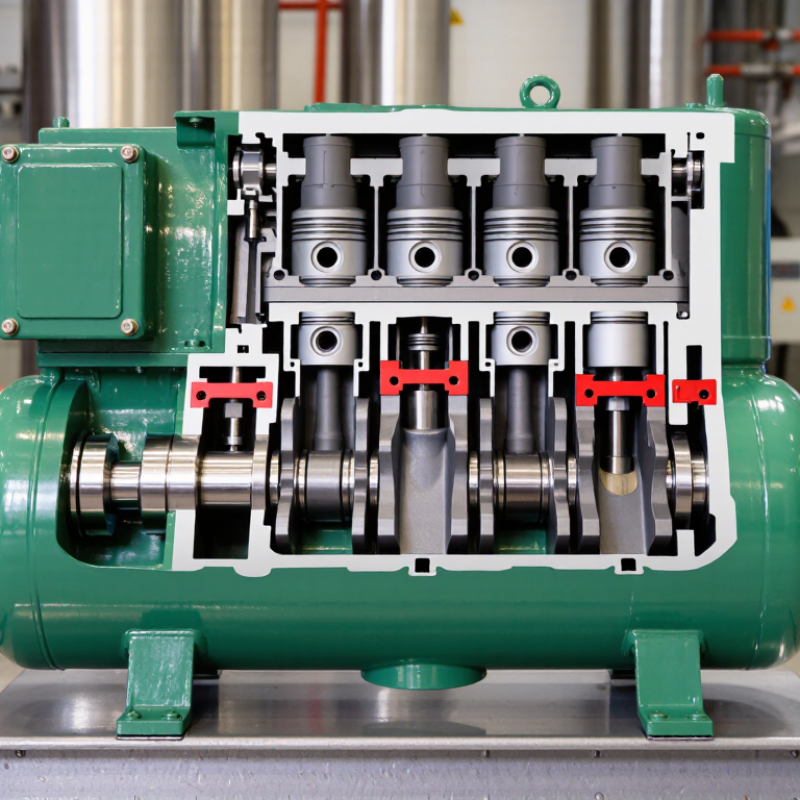
A Bitzer compressor is a mechanical heart in many refrigeration systems, but its operation depends on precise internal cooperation. Its steel housing protects the motor, crankshaft, cylinders, and lubrication circuit. Inside, the electric motor turns the crankshaft through a direct drive. Connecting rods then convert rotation into piston movement.
The suction valve admits low-pressure refrigerant into each cylinder. As the piston rises, the suction valve closes, and the discharge valve opens after compression. Small clearances matter. Excessive wear can reduce capacity, increase noise, and raise discharge temperature.
The stator creates the rotating magnetic field, while the rotor transfers torque to the crankshaft. An oil pump circulates lubricant through bearings and moving joints. In practice, oil return is rarely perfect. This detail is often underestimated.
Tips: Check oil level, terminal connections, vibration, and refrigerant pressures during service. A quiet compressor is not always healthy. Listen for irregular knocking, but do not diagnose problems by sound alone. Inspect suction filters and oil strainers because restricted flow can starve the compressor. Keep records of temperatures and pressure readings. They make small changes easier to identify. The internal layout looks simple in a diagram, yet real failures can involve several parts at once. A careful technician confirms measurements before replacing components.
How a Bitzer Compressor Moves and Compresses Refrigerant
A commercial refrigeration compressor moves refrigerant by creating controlled pressure differences. Low-pressure vapor leaves the evaporator and enters through the suction port. In a reciprocating design, pistons pull vapor into cylinders, then reduce its volume. The discharge valve opens when pressure rises above the condenser side. Hot, high-pressure vapor then travels toward the condenser, where heat leaves the refrigerant.
The motion is mechanical and precise. A crankshaft, bearings, valves, and oil system must work together continuously. Screw models use rotating male and female rotors instead of pistons. Both designs perform the same essential task: raising refrigerant pressure so heat can move to a warmer environment.
After condensation, the liquid passes through an expansion device. Its pressure drops sharply, and the refrigerant becomes cold enough to absorb heat again.
The cycle is deliberate.
The International Energy Agency reported in The Future of Cooling that cooling electricity demand could rise from about 2,020 TWh in 2016 to 6,200 TWh by 2050. That projection makes compressor efficiency more than a technical detail. It affects operating cost, grid demand, and emissions.
UNEP’s 2023 Global Status Report also states that buildings consume roughly 30% of global final energy.
Field experience shows that real systems are less tidy than diagrams. Dirty condensers, incorrect oil levels, and liquid returning to the compressor can reduce performance quickly. A small measurement error can mislead diagnosis. Technicians should confirm suction pressuredischarge pressuresuperheatsubcooling, and motor current before judging compressor health.
Common Bitzer Compressor Types and Their Operating Differences
What Is a Bitzer Compressor and How Does It Work?
A compressor raises refrigerant pressure before it enters the condenser. Its motor drives this cycle continuously. The operating design changes performance, maintenance, and application suitability. The International Energy Agency reports that cooling represented about 10% of global electricity use in 2018. Compressor selection therefore affects both reliability and energy demand.
Reciprocating compressors use pistons, valves, and cylinders to compress refrigerant in pulses. They handle changing loads well and suit smaller cold rooms or systems requiring staged capacity. Their moving parts can create vibration and noise. Scroll compressors use two interlocking spiral elements. They provide smoother flow, fewer wear points, and compact installation. However, liquid refrigerant can damage them. That risk is often underestimated.
Screw compressors use rotating male and female rotors. They deliver steady compression and perform well in large industrial refrigeration systems. Variable-speed control can reduce energy waste during partial-load operation. The U.S. Department of Energy identifies variable-speed compression as an important efficiency strategy for HVAC equipment. Semi-hermetic construction also permits service access without replacing the entire shell. Practical results still depend on oil management, suction conditions, and correct superheat. Field reality is less tidy. A compressor can appear oversized when poor airflow causes the real problem. ASHRAE’s 2022 Refrigeration Handbook stresses matching compressor capacity with system load, refrigerant properties, and operating temperatures. That matching process deserves more attention than catalog capacity alone.
Key Factors Affecting Bitzer Compressor Performance and Reliability
A Bitzer compressor is a positive-displacement machine used in refrigeration and air-conditioning systems. It traps refrigerant vapor, compresses it, and sends high-pressure gas toward the condenser. Its real performance depends on operating conditions, not nameplate capacity alone. The IEA’s The Future of Cooling report estimates that cooling demand could more than triple by 2050 without stronger efficiency measures. Compressor control therefore matters at every load level.
Suction pressure, discharge pressure, return-gas temperature, and refrigerant quality strongly affect reliability. Excessive superheat can overheat motor windings and degrade lubricant. Liquid refrigerant entering the cylinder can cause hydraulic shock. ASHRAE Handbook—Refrigeration identifies oil return, correct superheat, and stable refrigerant flow as essential design considerations. Small errors become expensive. A blocked filter-drier may increase pressure drop and reduce cooling capacity. Dirty condensers create similar stress.
Installation quality is often overlooked. Poor piping slopes can trap oil, especially in long vertical risers. Frequent short cycling also increases thermal and mechanical fatigue. Field technicians should record pressures, temperatures, amperage, and vibration during changing loads. The U.S. Department of Energy’s appliance efficiency analyses consistently show that part-load performance influences annual energy use, not just rated efficiency. Still, field data can be imperfect. A clean spreadsheet may hide a loose sensor or an intermittent control fault. That is where careful inspection matters.
What Is a Bitzer Compressor and How Does It Work?
Key Factors Affecting Compressor Performance and Reliability
The chart shows the theoretical maximum coefficient of performance (Carnot COP) for a vapor-compression cycle with a constant condensing temperature of 40°C. COP is calculated using absolute temperatures: COP = Tevap / (Tcond − Tevap). Actual compressor performance is lower because of isentropic efficiency, refrigerant superheat, subcooling, pressure losses, motor efficiency, oil conditions, and operating load.
Conclusion
A Bitzer Compressor is a mechanical device used in refrigeration and air-conditioning systems to circulate and compress refrigerant. Its main purpose is to raise the refrigerant’s pressure and temperature so heat can be released through the condenser before the refrigerant returns to the cooling cycle. These compressors are commonly used in commercial cooling, industrial refrigeration, cold storage, transport refrigeration, and climate-control equipment.
The main internal components typically include a motor, crankshaft or drive mechanism, compression chamber, valves, bearings, lubrication system, and protective controls. During operation, the compressor draws in low-pressure vapor, compresses it, and sends high-pressure vapor into the discharge line. Different designs, such as reciprocating, screw, and semi-hermetic models, use different methods to achieve compression and offer varying capacities, efficiency levels, and maintenance requirements. Performance and reliability depend on correct sizing, suitable refrigerant and oil, proper lubrication, clean heat exchangers, stable operating conditions, and regular inspection. Good installation and preventive maintenance can reduce wear, improve efficiency, and extend service life.

 YuanShengHeTong